The Number on Your Wrist Isn't a Verdict: Training With Endo When Your Tracker Says Rest

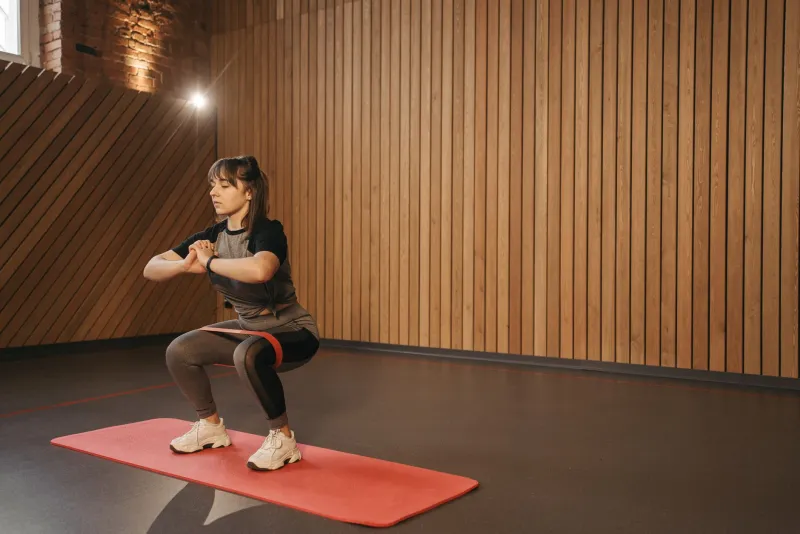
Photo: close-up smartwatch readiness score on wrist with woman in gym, via outdoorfuse.com
Wearables have become the unofficial coach in a lot of training plans. Your watch buzzes with a readiness score, your ring tells you your body battery is at 32%, and an app suggests a recovery day. For plenty of people, that's useful. For anyone living with endometriosis, it can feel like being marked by a system that has never met your pelvis.
I'm not anti-watch. I'm anti-watch-as-oracle. A tracker can spot a restless night and a rise in resting heart rate. It cannot feel a cramp that starts behind your hip and radiates down your leg. It doesn't know you spent an hour on the bathroom floor, or that your endo belly has made your usual leggings feel like a cage. Those things matter more than a colour-coded ring.
So how do you train for strength without letting a readiness score make the decision for you?
What your tracker actually measures
Most readiness and recovery scores are built from a mix of sleep duration and quality, heart rate variability (HRV), resting heart rate, breathing rate, temperature and how much you've been moving. HRV is the headline act. In simple terms, it's the variation in time between heartbeats. Higher isn't always better; it's about your personal pattern. Sleep tracking is clever but approximate. Step counts are just step counts.
None of these inputs know about endometriosis. They don't know about a night spent awake with pain, a hormonal migraine, or the specific fatigue that follows a flare. They also don't know that your pain can be high while your HRV looks fine, or that your score can tank because you had a stressful workday, not because your body is broken.
Your watch is a very confident intern with half the notes.
The two-minute self-check
Before you look at your readiness score, do this. Sit down, feet flat, phone face down. Give yourself two minutes.
- Pain check. Where is the pain? Is it period pain, endo pain, muscular soreness from last session, or something new? Rate it 0-10. If it's sharp, new or severe, stop and seek advice from your GP or clinician.
- Energy check. Could you make a cup of tea and walk to the front door without needing a lie-down? That's your baseline. Not perfect, just honest.
- Sleep check. Ignore the score. Ask: did I sleep? Did I wake in pain? Am I groggy or just annoyed?
- Breath check. Take five slow breaths. Can you breathe into your belly, or is everything tight and shallow? Tight breathing isn't a reason to cancel, but it's a reason to start gently.
- Intent check. What were you planning? A full session, a short one, a walk? Name the scaled version now.
Then, and only then, glance at the tracker. Green, amber or red is your call — not the app's. Green: go as planned, with warm-up. Amber: cut the volume, drop the weight, or shorten the session. Red: rest, walk, stretch, or do a few gentle mobility moves. Rest is a training decision.
When the data earns its place
Trust your wearable when it's telling you a story over time, not a single morning. If your resting heart rate has been up for three days, your sleep has been broken all week, and you feel flat, that's useful context. It might be a good week to deload. If your score is low and you also feel rough, believe the pattern.
Data is also handy for spotting things you might miss. Maybe your sessions always feel harder in the week before your period. Maybe your sleep tanks after a certain type of workout. Those patterns can help you plan around your body, not against it. Keep a simple note — 'flare', 'bad sleep', 'endo belly' — next to your session. Three words is enough.
When to override the score
Override it when the score contradicts your symptoms. A high readiness score doesn't cancel cramps. A low score doesn't mean you can't do a gentle session if you feel okay. If you're anxious about the number, that's a sign to take a break from checking it first thing.
Also override the idea that you must earn rest. If you're in pain, scaling or skipping is a decision, not a failure of willpower. Endometriosis is a full-body condition; your training plan should have room for it. That might mean a 10-minute mobility session instead of a planned lift, or a walk instead of a workout. Both count.
Make your plan bend
Strength training works best when it's repeatable. A plan that only works on perfect days isn't repeatable. Build in a 'minimum session' — two exercises, a short walk, or five minutes of breathing and hip mobility. Then a 'standard session' and a 'full session'. On endo days, choose the minimum without guilt. On better days, you can push a little. The goal is to keep the habit alive, not to win a consistency contest.
The bottom line
Your watch is a tool. It's not your GP, your physio, or the boss of your body. It can help you notice trends, and it can remind you to rest. But you are the one with the internal data: the cramp, the heaviness, the fog, the flicker of energy. Use the gadget as a second opinion. Then make the call.
You don't need a perfect readiness score to build strength. You need a plan that can bend, and the confidence to trust what you feel.