Small Humans, Steady Strength: Parenting With Endo Without Burning Out
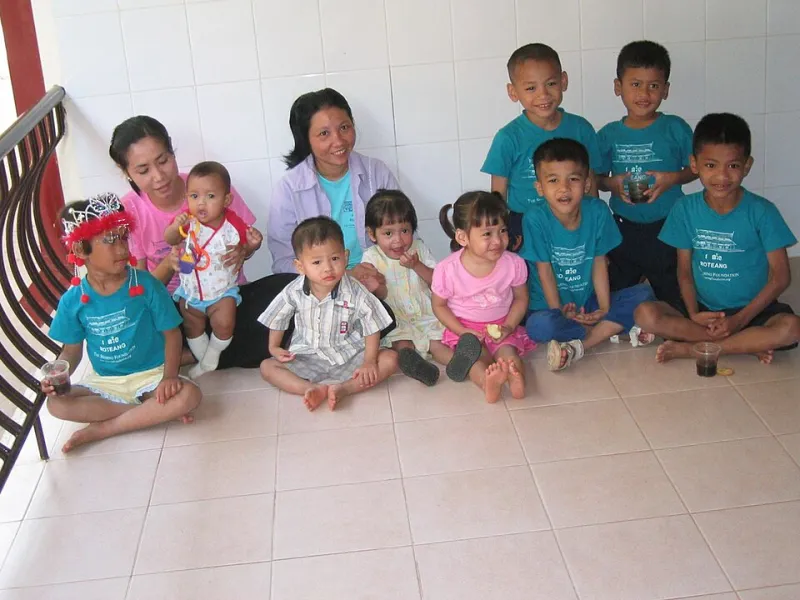
Photo: Cambodia4kids.org Beth Kanter from Massachusetts, USA, CC BY 2.0, via Wikimedia Commons
Parenting a toddler is a contact sport with unpredictable rules. One minute you are lifting a small person out of a cot, the next you are wrestling a buggy up a kerb while your pelvis files a formal complaint. If you live with endometriosis, that daily load can feel like a gym session you never signed up for — and certainly never recovered from.
But here is the thing: you are already strength training. The question is whether you are doing it in a way that supports your body or quietly drains it. This is not about adding a punishing workout on top of parenting. It is about using the movement you already do, plus a few well-placed movement snacks, to build strength at your pace.
The carry is the workout — so make it count
Lifting a toddler is a hinge, a squat and a carry all in one. Done well, it can build real-world strength. Done in a rush, with a twist and a held breath, it can leave you sore in all the wrong places.
Start by getting close to your child before you lift. Stand with your feet hip-width apart, soften your knees and hinge from the hips rather than rounding your back. Brace gently — imagine you are about to be poked in the tummy — and breathe out as you stand. Keep the child close to your body rather than at arm's length. Avoid twisting while you carry; turn your feet instead. And if you always carry on the same hip, try swapping sides, even if it feels odd at first.
The same rules apply to car seats, shopping bags and that awkward basket of washing. Your buggy can be active recovery too: push it with relaxed shoulders, keep your ribs stacked over your pelvis and let your glutes do some of the work. If your pelvis is having an endo day, that is not the moment to test your one-rep max. Use the buggy, ask for help or split the load into smaller trips. That is not weakness; it is pacing.
Movement snacks around nap times
You do not need a 45-minute window and a protein shaker to build strength. You need a few minutes and a bit of repetition. A movement snack is exactly what it sounds like: a short burst of purposeful movement that fits between the nappy change and the nursery pick-up.
When your child goes down for a nap, resist the urge to clean the kitchen first. Give yourself eight to twelve minutes. Try five slow sit-to-stands from the sofa, ten wall press-ups, eight glute bridges on the living room floor, and a short suitcase carry around the garden or up and down the hallway with a shopping bag. That is a full-body session in the time it takes to drink a cup of tea.
Keep your kit visible. A resistance band on the door handle, a mat that stays out, a pair of dumbbells by the telly. If it is hidden in a cupboard, it will not happen. And if nap time is short, do five minutes instead of ten. Something is always better than nothing, and consistency beats intensity when your energy is unpredictable.
Flare days: lower the bar, not the care
Endo flares do not check your childcare schedule. On a bad day, the goal is not to push through. The goal is to keep your nervous system calm and your body supported.
Try a simple tier system. On a green day, do your mini session and enjoy it. On an amber day, swap the session for gentle walking, breathing exercises and a few pelvic floor drops if they feel comfortable. On a red day, rest is the session. Heat, pain relief, a lie-down and a chat with your GP or women's health physio if things are not settling. Rest is not a failure of your fitness plan; it is part of it.
Guilt is not a metric. You are not behind. You are parenting with a chronic pain condition, and that takes more energy than most people realise. If you spent the afternoon on the sofa because your uterus decided to stage a protest, you still showed up for your child. That counts.
Plan for chaos, not around it
Toddlers are unpredictable, and endo is unpredictable. Trying to follow a rigid training plan is a recipe for frustration. Instead, build a flexible one.
Keep a minimum viable session in your head: three moves you can do in five minutes. Put your workout clothes somewhere you can see them. If you have a partner, friend or family member who can take the little one for twenty minutes, use that window without apologising. If your child is at nursery or with a childminder, protect one short slot for movement rather than filling it with chores. And if you use a council leisure centre with a creche, that is a legitimate strength session, not a luxury.
It also helps to plan around your cycle if you track it, but do not treat it as a spreadsheet. Some months will be predictable; others will not. The skill is in adapting, not in getting it perfect.
The mental load is part of the load
Carrying the mental load of parenting — appointments, nursery admin, food shopping, remembering the nappies — is exhausting in its own way. Add endo pain and fatigue, and it is no wonder you feel like you have nothing left for a workout.
So ask for help. Delegate the carry when you can. Sit down when you can. And remember that strength is not just about how much you can lift. It is about how well you recover, how kindly you speak to yourself and how consistently you show up for your body, even in small ways.
You are not failing at fitness. You are building strength in the middle of real life. That is the most functional training there is.