Stronger, Not Cured: Getting Real About Strength Training and Endometriosis Pain

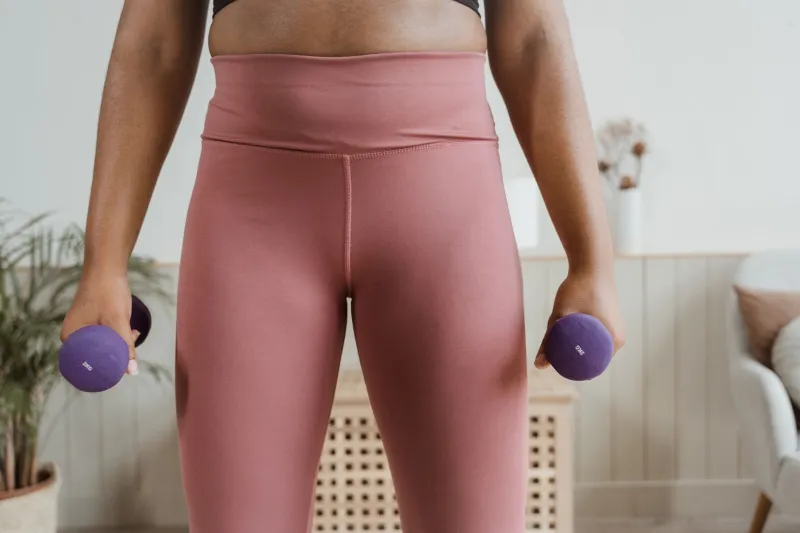
Photo: woman doing gentle resistance band strength exercise at home bright calm room, via www.shutterstock.com
If you've spent any time in endo spaces online, you'll have seen the claims. Lift weights, build your glutes, strengthen your core, and your pain will ease. Some posts are careful and kind. Others make it sound like a barbell is a cure.
Here at EndoLifter we're not here to sell you a miracle. We're here to help you move, manage pain and build strength at your own pace — and part of that means being straight with you about what strength work can realistically do for endometriosis pain, and what it can't.
So let's do the honest version.
What the research actually supports
Endometriosis affects roughly one in ten women and those assigned female at birth in the UK — around 1.5 million people. Despite that, the research base is famously patchy. Most studies are small, many are self-reported, and almost none can blind participants to whether they're exercising or not. That doesn't make the findings useless. It does mean we should hold them loosely.
What the evidence does reasonably consistently suggest is this: regular physical activity, including resistance training, is associated with lower reported pain intensity and better quality of life in people with chronic pelvic pain. Exercise is recommended in UK clinical guidance as part of a wider management plan for endometriosis — alongside pain relief, hormonal treatment, and surgery where appropriate. It is not positioned as a standalone treatment, and no reputable guideline claims it shrinks lesions or stops the disease progressing.
That's the honest headline: strength training is a supportive tool, not a cure.
Where the evidence gets thin
Here's where we need to be careful.
There's very little research looking specifically at resistance training in endometriosis. Most exercise studies in this population look at general activity, yoga, or aerobic work, and often lump endo in with other chronic pelvic pain conditions. We're borrowing a lot from adjacent fields.
We also don't have good data on dose. Nobody can tell you whether three sessions a week beats two, or whether heavy lifting outperforms bodyweight work for pain outcomes. Anyone quoting you a precise protocol as though it's evidence-based is overselling.
And there's a reason to be cautious about the "strength training fixes pain" narrative: some people with endo find that heavy loading, high-impact work, or exercising in the luteal phase flares their symptoms. The research rarely captures that nuance, because most trials report averages. You are not an average.
Why it might still help anyway
Plausibility isn't proof, but it's not nothing either. There are a few sensible mechanisms that make strength work a reasonable thing to try.
Graded exposure to movement. Living with pain often leads to guarding — bracing your pelvis, tensing your abdomen, moving cautiously. Over time that can make movement feel more threatening than it is. Deliberate, controlled strength work gives your nervous system evidence that movement is safe.
Deconditioning is real. Flare-ups, recovery from laparoscopy, and cancelled plans all chip away at strength and stamina. Rebuilding that isn't about punishment; it's about giving yourself a body that copes better with ordinary life.
Sleep, mood and stress. Resistance training tends to improve these, and all three influence how pain is experienced. That's an indirect benefit, but a meaningful one.
A sense of agency. This one's underrated. Endo takes a lot of control away. Showing up for a short session you chose, at a pace you set, gives some of it back.
The first eight weeks: what to actually expect
Not a transformation. Sorry.
Weeks one to three are usually about learning the movements and finding your tolerance. You may notice better sleep, slightly steadier mood, or nothing much at all. Some people get a temporary uptick in soreness — normal, and different from a flare.
Weeks four to six is often when everyday things start to feel easier. Stairs, carrying shopping, sitting on the floor with a child. Pain itself may not have budged.
By weeks seven and eight, you might see genuine strength gains — more reps, more control, less wobble. Whether your endo pain has changed by then is genuinely uncertain, and varies wildly between people. Some notice a difference. Plenty don't. Both are legitimate outcomes, and neither means you've failed.
Progress or coincidence?
This is the tricky bit. Endo symptoms fluctuate on their own, so it's easy to credit a good week to your new routine and blame a bad one on something else.
A few practical guardrails:
- Track two or three things, no more. Pain level, how many days you felt able to do what you wanted, and sleep.
- Look at four-week blocks, not single days.
- Note your cycle alongside it, so you can see patterns rather than guessing.
- Be sceptical of dramatic improvements in week two. Give it two months before you draw conclusions.
Talking to your GP or women's health physio
You don't need to convince anyone that lifting weights is magic. You need a clear, specific ask.
Try something like: "I've started a gentle strength routine twice a week. I'd like to know whether that's sensible alongside my current treatment, and whether I can be referred to a women's health physio for pelvic floor and core guidance."
That's specific, it's reasonable, and it's hard to wave away. Bring a short symptom log if you can — three lines a week is plenty. If you're told to just lose weight or that exercise will sort it out, it's fair to say: "I'm not expecting exercise to treat the endometriosis itself. I'm asking about support for managing symptoms alongside it."
When to pause
Strength work should not be making your endo worse. If a session reliably triggers a flare, back off the load, shorten it, or move it to a different point in your cycle. If you get severe pelvic pain, heavy bleeding, fever, or pain that's new and unexplained, stop and get it looked at. That's not a training issue.
Strength training won't cure endometriosis. But it can help you carry the days a bit more comfortably — and that's a modest, honest, genuinely worthwhile thing to aim for.