Clicky Knees, Steady Weights: Strength Training With Endo and Hypermobility
When your joints feel more extra than your endo
You know the sort of thing. Your knee does a little sideways shimmy when you stand up. Your elbow locks back further than it should. Your thumb bends into a shape that makes your friend wince. And alongside all that, you have endometriosis pain, fatigue and a body that already asks for careful handling.
Hypermobility is a spectrum. Some people are very flexible and have no pain at all. Others have joints that feel unstable, clicky or unreliable, along with muscle tiredness, proprioception differences and pain. Endometriosis can overlap with that picture, but it is not a simple case of one causing the other. Research is still working out the connections, and many people simply have both. What matters for training is not chasing a label before you start. It is learning how to load your body without relying on the end of your range.
If you suspect hypermobile Ehlers-Danlos syndrome or a hypermobility spectrum disorder, that is worth discussing with your GP. Diagnosis in the UK is usually made by a clinician with experience in the area, often rheumatology or a specialist service, not by an online quiz. But you do not need a formal diagnosis to make your strength sessions more joint-friendly.
The gym advice that does not fit bendy joints
A lot of standard gym advice assumes stiffness is the problem. Go deeper. Stretch more. Push through the last inch. For hypermobile joints, that can encourage you to hang out at end range, where passive structures do more of the work and muscles do less.
Strength training is still a brilliant idea. Strong muscles help support joints. The trick is to build strength through range you can control, not range that controls you. Think stable, not stiff. You are not trying to make your joints boring. You are trying to give them better backup.
Range of motion: stop before the end
A useful rule is to work in the range where you can keep control, then leave the last bit alone for now. That might mean a squat to a bench rather than a deep bum-to-heels squat. A step-up to a low step rather than a high box. A push-up from a wall or bench rather than the floor. A row with a supported chest rather than a free-standing hinge.
Keep an eye on knees and elbows locking back. A soft, controlled finish is usually more useful than a hard snap into end range. Mirrors, phone videos or a physio can help you spot what your body is doing, because hypermobile joints can feel normal when they are actually overextending.
Clicking on its own is not automatically a red flag. Lots of joints click. What matters more is pain, swelling, giving way, locking or a sense that the joint cannot be trusted. If a click comes with any of those, get it checked.
Tempo: slow down and own the middle
Speed is not your friend here. Slow the movement down and make the middle of the range do the work. Try a three-second lower on a squat or press, a one-second pause, then a controlled lift. Avoid bouncing out of the bottom or using momentum to fling yourself back up.
Isometrics can be a lovely option on endo flare days too. A wall sit, a glute bridge hold or a split squat hold gives you load without a lot of joint travel. Keep breathing. If you are bracing so hard that your jaw is clenched and your pelvic floor is gripping, ease off. Strength is not the same as white-knuckling your way through.
Exercise selection: stable, supported, simple
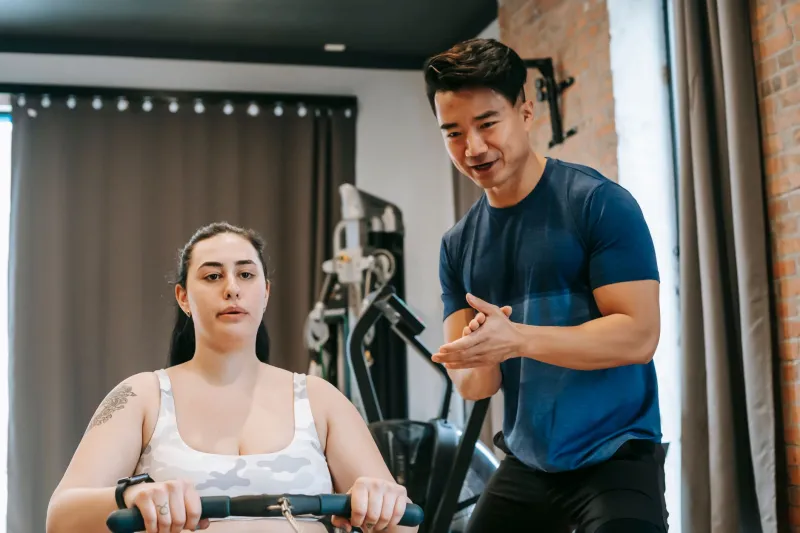
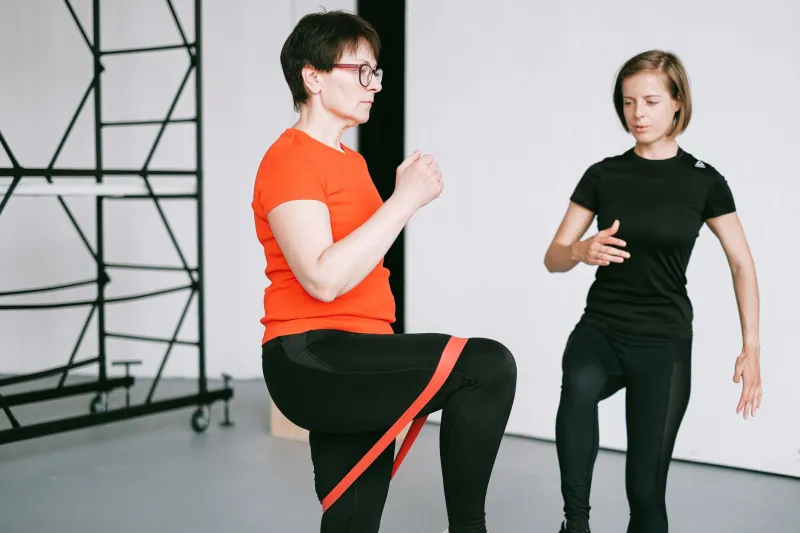
You do not need fancy kit to make this work. Machines, resistance bands and supported bodyweight exercises can be very useful because they give you something to lean on or guide the movement. Hip thrusts, leg presses, seated rows, chest presses, cable carries and low step-ups can all be adapted.
Balance work is worth adding in small doses, because hypermobile joints often need better feedback about where they are in space. Single-leg stands by the kitchen counter, slow heel raises or controlled toe taps are enough. You are training control, not auditioning for a circus.
If you have pelvic pain or pelvic floor symptoms alongside hypermobility, do not assume the answer is to clench harder. A women's health physio can assess whether your pelvic floor is overworking, underworking or just confused by pain. That is a specialist area and worth asking for.
Flare days, fatigue and realistic sessions
Hypermobility can come with fatigue, and endometriosis can bring its own energy bill. On a rough day, shrink the session rather than cancelling it in a dramatic huff. Two sets of six controlled reps is still training. A short walk and a few isometrics is still training. You are building a pattern your body can trust, not proving a point to the gym floor.
Warm up with movement you can control, not a long stretch session that leaves you flopped over your own knees. Save the big stretches for another day, and do not chase end range before loading. If a movement makes a joint feel wobbly or painful, change the setup. Use a block, a bench, a wall or a band. Adaptation is not cheating.
When to ask for a UK physio referral
Speak to your GP or check whether your local NHS MSK service accepts self-referral if you have joints that dislocate or subluxate repeatedly, new numbness or tingling, weakness, dropping things, foot drop, joint swelling, locking or giving way after a minor twist. Also ask if pain is affecting sleep, work or daily life, or if you want suspected hypermobility assessed properly.
For pelvic floor symptoms such as leaking, heaviness, difficulty emptying your bladder or bowel, or pain with sex, ask about a women's health physio. If you are recovering from endo surgery and something feels unstable or wrong, raise it with your surgical team or GP. Private physio is an option too, but choose someone HCPC-registered who understands hypermobility and persistent pain.
Seek urgent same-day help for saddle numbness, new bladder or bowel problems, or severe back pain with leg weakness. That is not a wait-and-see situation.
A small plan beats a bendy gamble
Start with two short sessions a week. Try a supported split squat, a wall push-up, a band row and a glute bridge, all slow and controlled. Add a carry or a low step-up if you feel steady. Keep reps comfortable, leave a bit in the tank, and note how your joints feel the next day.
At EndoLifter, we are not here to promise a cure or a perfect body. We are here for movement that respects your endo, your joints and your real life. Bendy is not broken. It just needs a steadier plan.