No Spotter, No Spiral: Strength Training Alone With Endometriosis

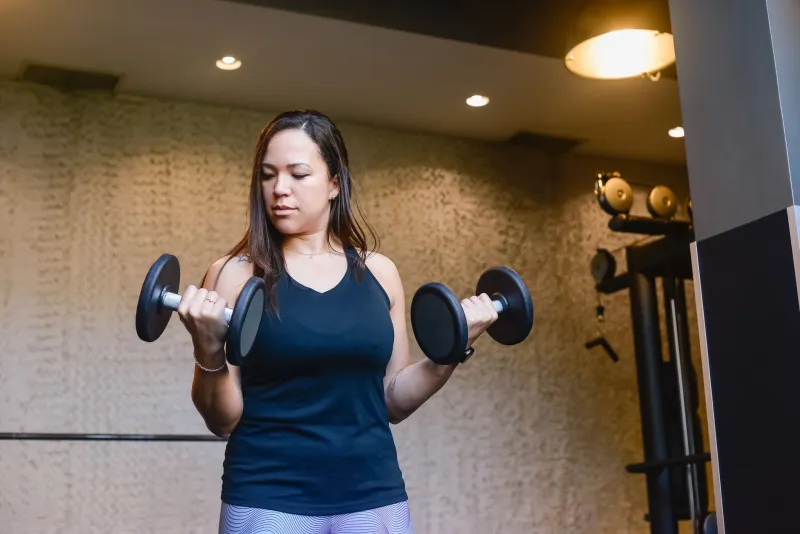
Photo: woman training alone at home with resistance band, phone and water nearby, safe strength workout, UK apartment, endometriosis friendly exercise, via i.pinimg.com
Training alone with endometriosis can feel like a lot of responsibility. There is no one to grab the other end of the barbell, no mate to notice you have gone quiet, and no receptionist watching the door. But living alone does not mean you have to choose between independence and safety. It means building a session that has a few quiet backups baked in — the kind you hopefully never need.
This is not a scare piece. Most solo sessions pass without incident. The aim is to make the unpredictable bits feel more manageable, so you can keep showing up for strength work without spending the whole time braced for disaster.
Start with a two-minute check-in, not a perfect one
Before you touch a weight, scan four things: pain, dizziness, bleeding and fatigue. A simple traffic-light system works. Green: symptoms are at your normal baseline and you feel steady on your feet. Amber: something is grumbling, so you shorten the session or choose supported options. Red: you are faint, dizzy, bleeding heavily, or in pain that feels new or severe. Red means rest or seek advice, not push through.
You do not need to rate your endo out of ten or predict the next hour. You just need a rough sense of whether today is a standing-up day or a sitting-down day. If you are unsure, start with the seated version. You can always add load later. You cannot un-faint on a treadmill.
Set up the room before you set up the set
Clear the floor. Put the mat down. Keep water, medication, a heat pack and your phone within reach. If you are at home, train near a wall or a sturdy chair so you have something to steady yourself on. If you are in a gym, choose a spot where you are not tucked away in a corner, and use machines or benches rather than free-standing loaded lifts if your balance is questionable.
Warmth matters too. Cold muscles and cold rooms make everything feel tighter. A hoodie you can peel off, a warm-up that actually raises your heart rate gently, and a session that starts with supported movement rather than a maximal lift — all small things that make a solo session less brittle.
Make your phone a colleague
Your phone is not just for music. Set up an ICE — in case of emergency — contact. Add a medical ID if your phone supports it. If you use a location-sharing app with someone you trust, switch it on for the session. Send a quick text before you start: 'Training for 30 mins, will message after.' It takes ten seconds and gives you a gentle deadline to check in.
Keep your phone on you or within arm's reach, not in a locker or across the room. Headphones are fine, but use transparency mode or keep one ear free if you are at home alone. If you have a smart speaker, you can set a timer and use voice commands to call for help, but do not rely on it as your only plan. At the gym, tell a staff member you are training solo and ask where the nearest defibrillator and first-aid kit are. It is not dramatic. It is just information.
Choose exercises that forgive a wobble
The best solo exercise is not the most impressive one. It is the one you can bail out of safely. Think seated or supported: sit-to-stands from a sturdy chair, supported split squats holding a doorframe, seated rows with a band, chest press on a bench or floor, glute bridges, dead bugs, pallof presses with a band. Machines and cables are your friends because they guide the movement and let you stop without dropping a barbell on yourself.
Be cautious with heavy overhead pressing if you get dizzy, loaded standing lifts when your pain is unpredictable, and anything inverted or overly unstable. Leave a couple of reps in reserve. You are training strength, not testing your ability to grind through a pain spike. If you feel a familiar endo ache building, switch to a seated variation or call it. A shorter session that leaves you steady is a successful session.
Have an eject button
Decide before you start what would make you stop. Sharp new pain, dizziness, feeling faint, heavy bleeding, chest pain or breathlessness are not 'push through' signals. If you need to get down, do it slowly: sit on a chair, then lower to the floor with your back against a wall if you can. Lie on your side with knees bent if that feels safer. Breathe slowly. Use heat if it helps. Take your medication if prescribed. Do not drive if you are dizzy or faint.
If symptoms are severe, new, or getting worse, contact NHS 111 or call 999 if you feel seriously unwell. For endo-specific concerns, your GP or specialist team is the right place to ask. Safety advice is not a substitute for personal medical advice.
Timing is part of the plan
Train when you have room to recover afterwards. A solo session squeezed between a commute and a late meeting is not the same as one where you can lie down for ten minutes if you need to. Morning or early afternoon often works better than late evening, when fatigue has piled up and you are more likely to skip the check-in. Eat something beforehand if you tend to feel lightheaded. Keep the session shorter than you think you need. Twenty focused minutes is real training.
The after-session handover
Cool down, drink water, and send that check-in text. Log how you felt — not to judge yourself, but to spot patterns. Leave your phone nearby for the next hour. If you feel shaky, sit down before you shower. If the session has triggered a flare, switch to your flare-up care plan and rest without treating it as failure.
Training alone with endo is not about being fearless. It is about being prepared enough to feel free. A clear floor, a charged phone, a sensible exercise choice and an agreed check-in can make the difference between a session that feels precarious and one that feels like yours.
You are allowed to take up space in the gym or your living room. You are also allowed to make that space safe.