Spend Your Energy Like Money: A Flare-Risk Budget for Strength Training
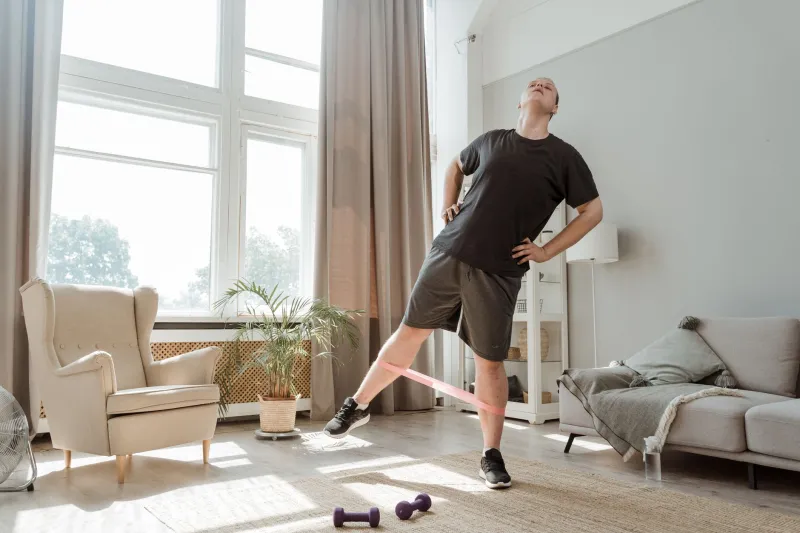
Strength training can be a genuinely useful part of living with endometriosis. It can support bone health, joint stability, mood and day-to-day function. But endo rarely sticks to a tidy training plan. A week that looks manageable on paper can turn into a pain spike, a fatigue crash or a few days of payback. That is where the idea of a flare-risk budget comes in.
This is not about rationing movement or being rigid. It is about spending your energy with a bit more intention, so strength work feels sustainable rather than all-or-nothing.
The budget idea, minus the spreadsheet guilt
Think of each week as having a flare-risk budget. Some weeks the budget is generous. Other weeks it is tight before you have even laced up your trainers. You are not failing when that happens; you are working with the body and the week you actually have.
It helps to picture two pots: your training spend and your recovery reserve. Training spend covers strength sessions, walks, housework, commuting and anything else that asks something of your body. Recovery reserve is for sleep, food, rest, heat, breathing space and the unglamorous stuff that helps you bounce back.
A good week is not the one where you spend the most. It is the one where you do not accidentally raid the recovery reserve to pay for a workout.
Start by mapping your real patterns
Before you plan a single session, spend two to four weeks noticing what tends to happen around your pain, fatigue and energy. You do not need a perfect tracker. A notes app is fine. Jot down your pain level, sleep, stress, bowel or bladder symptoms, and where you are in your cycle if that feels relevant to you.
Then look for payback. Did a session leave you more tired than expected the next day? Did a certain type of movement flare pelvic pain? Did a short walk help more than a long one? You are looking for patterns, not prophecies. Endo can be unpredictable, but even a loose pattern gives you something to plan around.
Choose two or three anchors, not a fantasy week
A lot of training plans are written for someone with no commute, no cramps and a flawless sleep schedule. You are allowed to ignore those. Most people do better with two strength sessions and one gentle movement slot, with room to shuffle things around.
For example, Tuesday and Saturday could be your strength anchors, with a short walk or mobility session on Thursday. Try to leave a recovery day between the more demanding sessions where you can. A session does not need to be an hour. Fifteen to twenty-five minutes of focused work is a real session.
It also helps to have a minimum viable version. If your planned session is three rounds of four exercises, your minimum version might be two exercises, one set each, done slowly. That way a low-energy day does not become a total write-off.
Give each session a spending limit
Before you start, decide what you are willing to spend. A simple session structure might be a five-minute warm-up, three or four main exercises, and a short exit ramp of stretching or breathing. Keep the effort around a five to seven out of ten. You want to finish most sets feeling like you could have done two or three more reps, not like you have been chased by a bear.
Watch for your stop signs. Sharp pain, dizziness, heavy bleeding, pain that builds rather than settles, or a strong sense that something is wrong are all reasons to stop. A good strength session should leave you feeling more like yourself, not less.
Adjust load before you cancel
On an amber day, you do not have to cancel. You can reduce the load by twenty to thirty per cent, cut a set, use a band instead of a dumbbell, lean on a chair, shorten the range of motion or slow everything down. On a red day, recovery is the session. Rest is not a failed workout; it is a line item in the budget.
Recovery counts as training spend too. Sleep, regular food, heat packs, gentle walking and breathing exercises are not extras. They are part of how you build strength without emptying the tank.
Keep it clinician-aware
If pain is new, worsening, or you are unsure whether a movement is safe for you, check in with your GP or a women's health physio. A physio can help you adapt positions, load and breathing, especially if you have pelvic floor symptoms or pain with exercise. You do not need to be an expert in endometriosis to ask for tailored support.
Review the week without judging it
At the end of the week, ask three questions. What did I spend? What did I get back? What is one small tweak for next week? Maybe you swap a Saturday session for a Sunday one. Maybe you keep the same plan but reduce the weights. Maybe you add a proper rest day and stop treating it as a last resort.
Unused budget does not roll over as guilt. The aim is not a perfect week. It is a sustainable relationship with strength, one that can flex around flares instead of falling apart because of them.