Post-Op, Not Postponed: Rebuilding Strength in the Weeks After Laparoscopy
There is a specific sort of frustration that arrives about nine days after surgery. The wounds look fine. The worst of the gas pain has gone. You feel, briefly, almost normal. So you carry the laundry basket downstairs, hoover half the living room and then spend the next two days on the sofa wondering what you have done.
If that is you, welcome. You are not reckless, and you have not ruined your recovery. You have simply met the gap between how you feel and what your tissue is actually doing.
Before anything else
This is general guidance, not medical advice, and it does not replace what your surgeon, gynae team or GP has told you. Recovery advice varies by NHS trust and by what was actually done while you were under, whether that was diagnosis only, excision of endometriosis, adhesiolysis or something else again. Where this article and your discharge letter disagree, the letter wins. Always.
What NHS recovery advice usually covers
Most trusts send you home with a fairly similar set of points, even if the wording differs:
- Wind and shoulder-tip pain in the first few days, caused by the gas used to inflate your abdomen. Moving about gently and sipping fluids tends to help more than lying still.
- Lifting limits. Commonly something like nothing heavier than a full kettle for two to four weeks, sometimes longer depending on the surgery.
- Driving only once you can do an emergency stop without pain or hesitation, and once you have checked your insurance.
- Time off work ranging from around one to three weeks for desk-based jobs, considerably longer for physical work.
- Nothing in the vagina (tampons, sex, menstrual cups) for a few weeks, and possibly longer after certain procedures.
- Bleeding and discharge that may come and go, plus a first period that may be early, late, heavier or stranger than usual.
- Fatigue that hangs around for weeks rather than days. This one surprises people most.
None of that tells you when to pick up a dumbbell. So here is a way to think about it in phases rather than dates.
Phase one: settle (roughly the first week and a half)
Your only jobs are healing, sleeping, eating and moving enough to keep your circulation going. Think laps of the kitchen, short walks to the bin and back, gentle breathing, and sitting up properly rather than rolling out of bed.
If you have been shown pelvic floor activations by a physio, gentle ones are usually fine. Bracing hard, planks, crunches, heavy shopping bags, hoovering, dog-walking and any kind of lifting are not. This is not laziness. It is the phase where doing less now buys you more later.
Phase two: rebuild the base (weeks two to four)
This is where walking does most of the work. Short and often beats long and heroic. Two ten-minute walks will serve you better than one forty-minute mission that leaves you sore and swollen by teatime.
Add in daily function as it feels comfortable: stairs, cooking, gentle stretching, picking things up from the floor with your knees rather than your back. If you can access a women's health physio, either through the NHS or privately, this is a genuinely useful point to do it. They can check for abdominal separation, pelvic floor function and scarring, and give you a proper starting point.
Phase three: add load (weeks four to eight, sometimes later)
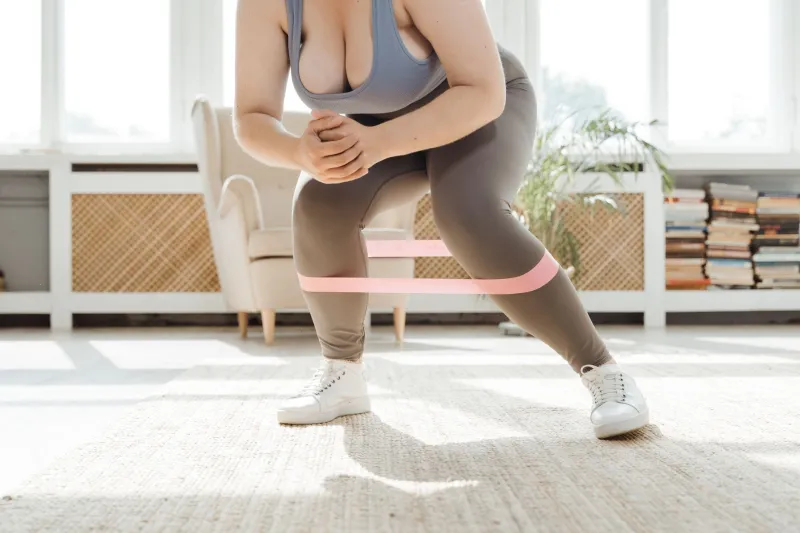
Strength work can start creeping back in, but start at about half of what you think you can manage. Sit-to-stands from a dining chair. Wall press-ups. Band rows. Light dumbbell carries around the kitchen. Glute bridges. Two sets of six, stopping with a couple of reps clearly left in the tank.
High-impact things, heavy loaded carries, big abdominal work and anything that makes you clench and hold your breath can usually wait a bit longer. If in doubt, ask.
How to scale up and down without spiralling
Treat each day as a traffic light rather than a schedule.
- Green: pain at your baseline, no new bleeding, slept reasonably, energy okay. You can nudge things forward slightly.
- Amber: sore, tired, spotting, poor sleep. Repeat last week rather than progressing. Repetition is still training.
- Red: pain climbing, heavy bleeding, feeling fluey, wiped out. Rest, gentle walking, and check in with a clinician if it persists.
Symptoms often lag by 24 to 48 hours, so judge a session by how you feel the following morning, not by how you felt mid-set.
Stop and ask for help if
- You have a fever, or your wounds become hot, red, swollen or start oozing.
- Discharge smells unpleasant, or bleeding becomes heavy (soaking a pad an hour).
- Pain is getting worse rather than better after the first fortnight, or is not touched by your usual pain relief.
- You cannot pass urine, or you are vomiting.
- One calf is swollen, hot or painful.
- You have chest pain or breathlessness. That one is 999, not a wait-and-see.
For anything else, NHS 111 online, your GP or your consultant's secretary are all reasonable ports of call. You will not be labelled a nuisance for asking.
The confidence bit
Muscle comes back. It genuinely does, and faster than it was built the first time. What tends to take longer is trust in your own body, and that is rebuilt by small, repeatable evidence rather than by a dramatic comeback week.
Your first two sessions back are a test, not a workout. Give yourself the same patience you would give a friend, and let the timeline be boringly, unglamorously gradual.