Bloated, Not Benched: A Strength Session That Bends With Endo Belly

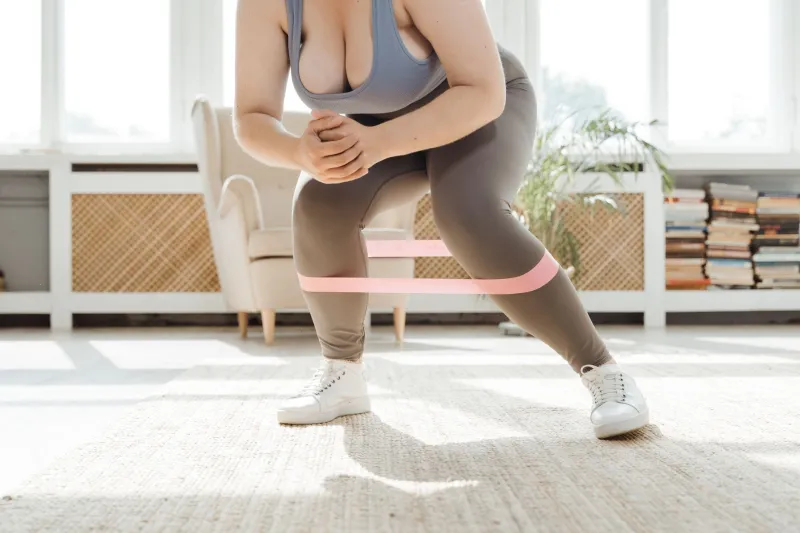
Photo: woman with bloating doing gentle strength exercise at home with soft clothing, via ca-times.brightspotcdn.com
Endo belly doesn't read the plan. You can have a decent night's sleep, a clear diary and a gym bag by the door, then wake up with a swollen, tender abdomen that makes your usual session feel like someone moved the furniture overnight. That's not a failure of discipline. It's information.
On those days, the goal isn't to smash a personal best. It's to keep the habit of moving, load your body in a way it can accept, and leave feeling no worse than you started. Here's how to adapt a strength session when bloating changes the rules.
Start with the waistband, not the workout
Before you touch a weight, check your kit. A high, firm waistband can turn a gentle hinge into a test of endurance. Swap to soft, wide-band leggings or loose joggers. Layering helps if you're going from cold street to warm room. If a sports bra feels tight across your ribs, choose the softer one. Small comfort wins aren't vanity; they change how you breathe and brace.
Give yourself five minutes to land. Lie on your side with knees bent, or sit on a chair with feet flat, and breathe gently into your lower ribs. Don't force a big belly breath if it feels uncomfortable. The aim is to downshift, not to perform breathing.
Rethink core work
Traditional core work — crunches, sit-ups, V-ups, hanging knee raises — often asks a bloated abdomen to compress and curl. That can feel grim, and it's rarely necessary for strength. Swap it for anti-rotation and bracing work that lets you stay long through the middle.
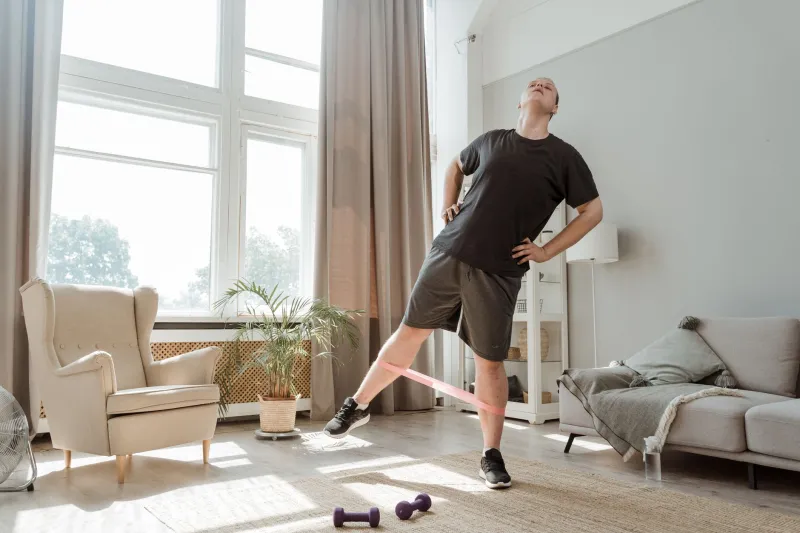
Try a half-kneeling pallof press with a band, a modified dead bug with one heel resting on the floor, or a side plank from your knees with a cushion under your hip. Keep the reps low and the breath easy. If you feel yourself holding your breath, reduce the range or the band tension. A set of six calm reps beats a set of fifteen clenched ones.
Hinges and squats: widen, elevate, shorten
Bloating can shift your centre of gravity and make a familiar hip hinge feel oddly forward-heavy. Widen your stance slightly, turn toes out a touch, and hinge to a box or bench rather than chasing the floor. A dowel against your back can give feedback without adding load. If you're using kettlebells or dumbbells, keep them close to your body and reduce the range.
For squats, box squats are your friend. Sit back to a chair or bench, pause, stand. A wider stance gives your belly room between your thighs. Holding a doorframe or a sturdy rail can help you feel steady. Skip deep, narrow squats today; they tend to invite more compression and more breath-holding. You can still load the movement with a light dumbbell at your chest if that feels okay.
Floor-based moves need a plan
Getting down to the floor and back up is part of the session. Use a cushion for your head, keep a rolled towel nearby, and log-roll to get up rather than crunching forward. If lying on your back makes your abdomen feel tight or your breath shallow, do the same movement side-lying or seated. A seated band row, a side-lying glute bridge or a chair-based hip hinge can all count as strength work.
What to skip today
Skip anything that asks you to hold your breath hard, compress your waist, hang upside down, or bounce. That includes heavy loaded carries if the belt line digs in, high-impact jumping, deep spinal twisting under load, and long sets of abdominal flexion. You don't need to make a dramatic announcement; just choose the next best option.
When to stop
Stop if you get sharp or new pain, dizziness, nausea, unusual shortness of breath, or pain that keeps climbing after you lower the load. Stop if you feel light-headed or shaky. If you have fever, heavy bleeding, vomiting, or pain that's severe and unrelenting, seek urgent NHS advice rather than pushing through a session. Exercise should not be a test of toughness.
Bring in backup without making it another job
A pelvic health physio can help you find positions that work with your body, especially if you're guarding your pelvic floor or avoiding certain moves out of fear. Ask your GP or consultant for a referral, and mention that you want to strength train, not just "do exercise". If you're under an NHS pain team, ask whether a physiotherapist can review your session plan.
Keep it simple: a two-line note after a session — what you did, how your symptoms responded the next day. That's enough. The point isn't to turn your training into a medical project. It's to gather useful clues so movement feels more supported and less like guesswork.
Endo belly days don't have to be write-offs. Bend the session, not your sense of self. A shorter, softer, wider-stance workout still counts. You're building a relationship with strength that can survive real life — bloat, fatigue, cancelled trains and all.