Beyond Pain Management: Why Your Bones Belong in Your Endo Plan
There's a moment in a lot of endometriosis journeys where you finally land on a treatment that dials the pain down, and you get a chunk of your life back. Then you read the patient leaflet properly and a small phrase catches your eye: bone mineral density. It's easy to skim past. It's also worth a proper look.
This isn't a scare piece. Think of it as a "know what you're working with" piece. Because if your treatment plan happens to nudge your skeleton, the strength work you're doing — or tentatively thinking about doing — stops being just about pain. It becomes bone maintenance too.
The bit that doesn't always make the leaflet
A few treatments used in endometriosis care can affect bone. GnRH analogues — goserelin (Zoladex), leuprorelin (Prostap) and triptorelin — work by pressing pause on oestrogen production, which is why they can ease endo symptoms. That same pause is why UK guidance recommends "add-back" HRT alongside them, to protect bone and reduce menopausal side effects while you're on treatment. If you've been on a GnRH analogue without add-back, that's a reasonable thing to raise rather than panic about.
Surgical menopause is another one. If your ovaries are removed, bone loss can be faster than it would have been naturally, which is why the British Menopause Society's line is generally that HRT is considered until around the average age of natural menopause (roughly 51) unless there's a reason not to.
Long-term progestogen use — including depot injections — has also been linked with changes in bone density in some research, though the picture is muddier and depends heavily on dose, duration and the person.
What the evidence says — and where it goes quiet
Here's the honest bit. Bone mineral density (BMD), measured by a DEXA scan, is a snapshot of how dense your bones are. It is not a crystal ball. Plenty of people with lower BMD never break a bone, and plenty of fractures happen in people whose density looked fine.
What actually shapes your fracture risk is a cluster of things: age, family history of hip fracture, smoking, alcohol intake, body weight, whether you've had falls or fractures before, how much you eat, and how much you load your skeleton day to day. Endometriosis-specific bone research is still fairly thin, and much of what we know is borrowed from menopause and other long-term hormonal treatment research.
The reassuring part: bone lost during a course of GnRH treatment often partially recovers once the treatment stops. The less reassuring part: "partially" isn't "entirely," which is exactly why loading your bones while you're able is a sensible habit rather than an optional extra.
Why loading matters more than you'd think
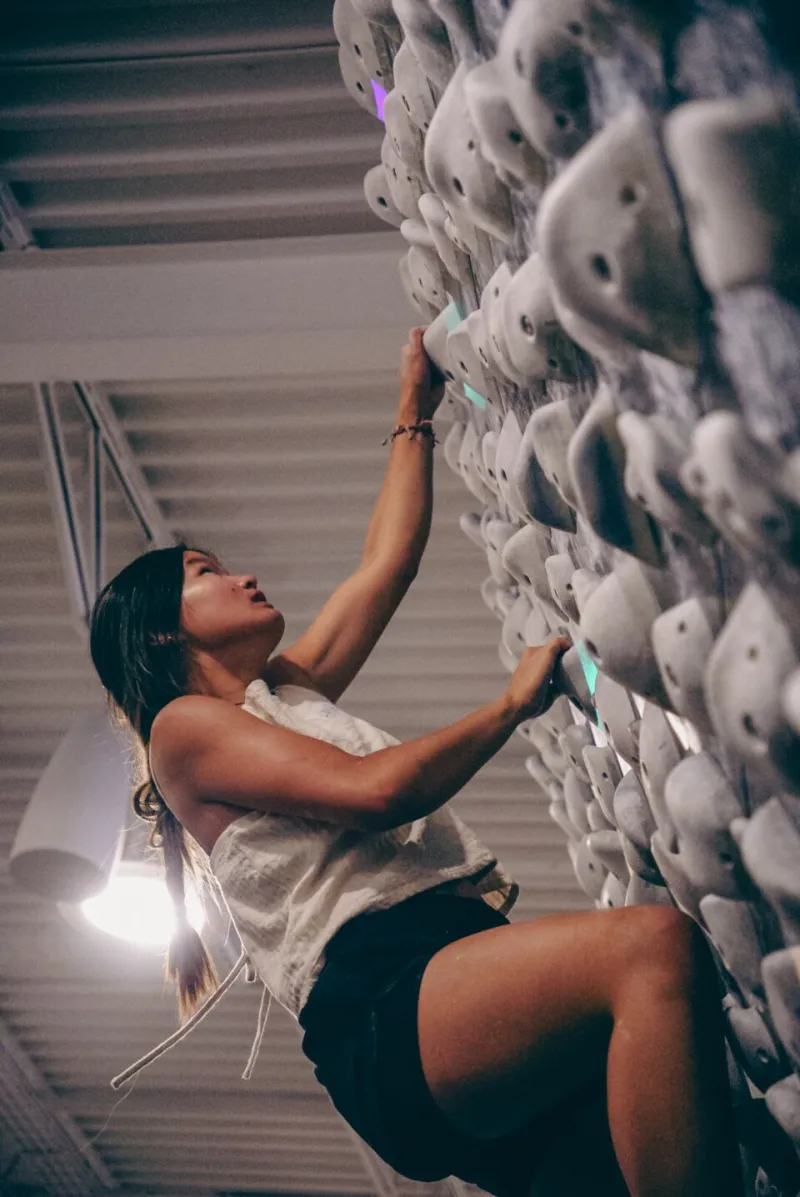
Bone isn't concrete. It's living tissue that remodels itself in response to stress — and the biggest stress it responds to is muscle pulling on it, plus the odd bit of impact. That's why resistance training and weight-bearing movement sit alongside calcium and vitamin D in every bone health guideline going.
You don't need a gym. You don't need to be pain-free. You need two things: enough load to be noticeable, and enough consistency to repeat it. Two short sessions a week is a genuinely respectable starting point.
A bone-friendly session for a good day
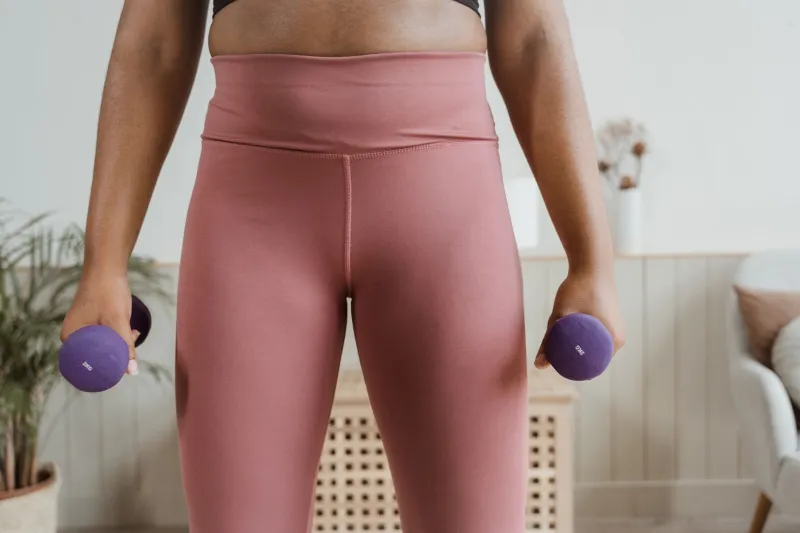
Twenty-five minutes, one set of dumbbells or a couple of filled water bottles, and a chair for support when you want it. Aim for a weight where you could manage two or three more reps than you actually do.
- Warm-up (4 mins): marching on the spot, arm circles, gentle bodyweight squats, ankle rolls.
- Sit-to-stand or goblet squat: 3 sets of 8. Slow down on the way back up.
- Hip hinge with weights: 3 sets of 8. Hinge from the hips, keep the load close.
- Step-ups onto a bottom stair: 2 sets of 8 each leg, holding the bannister if you like.
- Single-arm row, hand on chair: 3 sets of 10 each side.
- Overhead or incline press: 2 sets of 8.
- Calf raises: 3 sets of 12, plus 2 sets of 10 small heel drops off a step if that's comfortable.
- Optional impact: 2 sets of 10 gentle heel drops or small two-footed hops — only if your pelvis and pain levels are on side that day.
The same session, rewritten for a flare day
Bone-friendly doesn't mean all-or-nothing. On a rough day, drop the load and keep the pattern:
- Seated sit-to-stands from the sofa, 2 sets of 6.
- Glute bridges, 2 sets of 8, or simply squeezing and holding for five seconds.
- Band or towel rows seated in a chair, 2 sets of 10.
- Wall press-ups, 2 sets of 8.
- Supported calf raises holding the kitchen counter, 2 sets of 10.
That's still loading. That still counts. Ten minutes beats zero minutes, every single time.
Questions worth taking to your GP or specialist
Go in with a short list — appointments are short and it helps to be direct:
- Is the treatment I'm on known to affect bone density, and am I on add-back HRT if I should be?
- Given my age, history and treatment length, would a DEXA scan or a fracture risk assessment be appropriate for me?
- Should I be checking vitamin D, calcium intake or anything else?
- Can I be referred to an NHS physiotherapist — ideally one with experience in pelvic health or women's health — for help building a programme around my pain?
- What signs should send me back to you sooner rather than later?
Some areas of the UK offer physiotherapy self-referral, so it's worth checking your local trust's website before assuming you need to go through your GP.
The small things that stack up
NHS advice is 10 micrograms of vitamin D daily through autumn and winter (year-round if you cover up or spend most time indoors), and around 700mg of calcium a day from food — milk, yoghurt, cheese, fortified plant milks, tinned sardines, tofu, leafy greens. Smoking and regular heavy drinking both work against bone. Sleep and adequate food intake matter more than most bone leaflets admit.
None of this is a verdict on your treatment. If a GnRH analogue or surgery is what gives you your life back, that's a real and valid trade-off — and the point of strength work is to stack the odds in your favour while you make it. Your bones are part of your endo plan. They just haven't been invited to the meeting yet.