The Small-Kit, Big-Confidence Approach: Strength at Home for Under £100
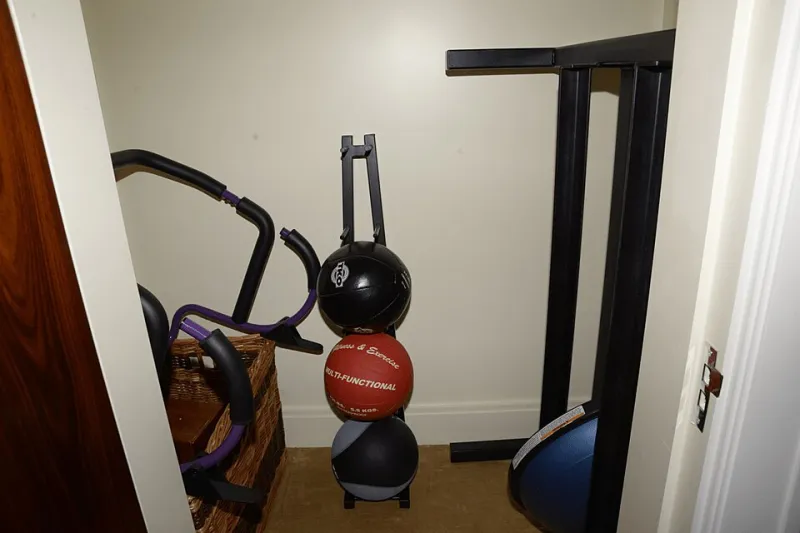
Photo: Federal Bureau of Investigation, Public domain, via Wikimedia Commons
A gym membership can be brilliant, but it is not the only way to build strength. For plenty of people with endometriosis, training at home is easier to fit around fatigue, pain and the general unpredictability of a flare. The good news is that you do not need much kit. A sensible £100 can buy a small, adaptable set-up that works on good days and can be dialled down on the rougher ones.
The trick is buying for flexibility, not fantasy. If a piece of equipment only works when you are pain-free, energised and have a spare hour, it will probably end up at the back of the cupboard.
Buy for your worst day, not your best
Before you buy anything, ask a simple question: can I use this when I am at about sixty per cent? If the answer is no, think carefully. The best home kit is the stuff you can use seated, standing, slowly, supported, or for a short ten-minute session. That is what makes it useful for endometriosis, not just for a hypothetical version of you who always feels great.
The worthwhile buys
Resistance bands: £10 to £20
A set of loop bands and one long band is probably the best value purchase you can make. They are light, portable and kind to joints. You can use them for rows, presses, glute work, shoulder mobility and gentle strengthening. On higher-pain days, take the band to a chair and do seated rows or slow presses. Check for latex allergies and look for fabric bands if latex is an issue.
Sliders: £8 to £15
Sliders are simple discs, but furniture sliders or even socks on a smooth floor can do a similar job. They are useful for hamstring curls, gentle core work and controlled leg movements. On flare days, keep the range small and do them seated or lying down with support. They are not essential, but they are cheap and surprisingly versatile.
Adjustable dumbbells: £40 to £70
This is where most of the budget goes. Adjustable dumbbells, or a single adjustable kettlebell, let you change load without filling a room with fixed weights. Second-hand sets are often brilliant value. You do not need a huge range to start; something like two to ten kilos per hand will cover a lot of ground. On higher-pain days, use a lighter load, do isometric holds, or simply carry one weight for a short, controlled walk around the room.
A support cushion: £15 to £25
A firm wedge or support cushion is not a medical device, but it can make floor work more comfortable. It can go under your hips, behind your back or under a knee. If lying on the floor tends to aggravate pelvic pain, a cushion can help you find a position that feels less exposed and more supported. It is also useful for seated exercise.
The free stuff you already own
A sturdy chair, a wall, a bottom step and a towel are all equipment. Do not underestimate them. Chair-supported squats, wall presses, step-ups and towel-assisted stretches are proper strength work.
A sample £100 basket
| Item | Typical price |
|---|---|
| Resistance bands | £15 |
| Sliders | £10 |
| Adjustable dumbbells, second-hand | £55 |
| Support cushion | £20 |
| Total | £100 |
Prices vary, so treat this as a rough guide. Check returns policies, and if you are buying second-hand weights, inspect them for damage before handing over cash.
What is not worth it
There is a lot of fitness marketing that sounds helpful but is not. Waist trainers, sweat belts, vibration plates, smart mirrors, posture correctors, detox teas and vague 'endo-specific' gadgets are rarely worth the money. Be wary of anything promising to 'fix your hormones', 'burn fat while you rest' or 'spot-reduce' belly fat. Endometriosis is not a fitness failure, and no gadget is going to outsmart it.
A heavy barbell without a rack or coaching is another skip for most home set-ups. It is not that strength training with a barbell is bad; it is that the cost, space and safety requirements make it a poor first buy for a £100 kit.
Adapting the kit on higher-pain days
On a higher-pain day, shorten the session rather than abandoning it completely. Use the bands for seated rows and slow presses. Use the sliders for small-range hamstring curls while lying on your side or seated. Use the dumbbells for light isometric holds or supported carries. Put the cushion behind your back or under your hips. Ten minutes is enough to keep the habit alive without asking too much of your body.
Stop if you get sharp pain, dizziness, heavy bleeding or a feeling that something is not right. If pain is new or worsening, speak to your GP or a women's health physio. A clinician can help you work out what is appropriate for you.
Where to shop in the UK
Argos, Decathlon, Sports Direct and local sports shops are all reasonable places to start. Amazon is convenient but check the reviews carefully. Facebook Marketplace and Gumtree can be goldmines for second-hand dumbbells, especially in January when people clear out. Always check condition and ask about collection before you commit.
The real confidence boost
The confidence does not come from owning the perfect kit. It comes from doing a short, sensible session and discovering that strength work can fit around endo rather than demanding you ignore it. A small kit, a clear plan and permission to scale back is a far better investment than a cupboard full of things you never use.