Pack the Spare Pants, Not the Shame: Strength Training on Endo Bleeding Days
Bleeding is one of those endo realities that can quietly take over the whole gym question. Not the weights. Not the machines. Not even the fear of feeling weak. It is the mental load of pads, pants, leaks, changing rooms and whether anyone will notice. That load is real, and it deserves a plan rather than a pep talk.
At EndoLifter, we are not here to tell you that bleeding is no big deal. It can be a big deal. But it is not an automatic reason to bench yourself. Sometimes the kindest move is a shorter session, a different kit list or a workout at home. Sometimes it is walking into the gym with a spare pair of pants in your bag and a route to the toilet already mapped. Both count.
Separate the bleed from the flare
Endo bleeding and an endo flare are not always the same event. You might be bleeding heavily but feel otherwise okay. You might have light bleeding and feel wiped out, dizzy or in serious pain. The bleed is one piece of information, not the whole verdict.
If bleeding is unusually heavy for you, you are soaking through protection quickly, feeling faint, or the pain is severe or different from your normal, stop and seek medical advice. NHS 111 can help you work out what to do next, and urgent symptoms need urgent attention. This is not about being dramatic. It is about being sensible.
For the everyday decision about training, ask yourself two questions: am I safe to move, and am I set up for the logistics? If the answer to the first is no, rest and clinical advice come first. If the answer to the second is not yet, that is fixable.
Build a gym bag that has your back
A good bleeding-day gym bag is less about motivation and more about admin. Think dark leggings or shorts, a spare pair of pants, period pants, pads with wings, a small pack of wipes, a hand towel, a sealable bag for anything used, and a dark hoodie or towel you can tie around your waist if you want extra cover. A small mirror-free check in the changing room is enough. You are not preparing for an inspection.
Period pants can work well under looser gym shorts or dark leggings, especially if you are not sure how heavy the day will be. Pads can be fine too, but they can bunch or shift during hip hinges, cycling and split squats. Try your combination on a home workout first if you can. Wings and a snug fit help. Some people double up with period pants as a backup rather than relying on a pad alone. That is not fussy. It is practical.
UK shops make this easy enough: Boots and Superdrug for travel wipes and pads, Marks & Spencer, Primark or specialist period-pant brands for backup pants. You do not need a fancy kit. You need a bag that means a leak is an inconvenience, not a crisis.
Time sessions around heavy days, not against them
If your bleeding follows a fairly predictable pattern, use it. The first day or two might be a home-based or very short gym day. Later days might be fine for a normal session. If your cycle is unpredictable, which is very endo, keep a default short session ready and treat the longer one as a bonus.
Morning sessions can be easier because you have just changed protection and the day has not had time to get complicated. Evening sessions can work if you prefer a quieter gym and can go straight home afterwards. Neither is morally superior. Book off-peak slots if you can. Fewer people in the changing room is not vanity; it is accessibility.
Map the toilets before you map the weights
Do a recce before you need it. Where are the toilets? Are there private cubicles or just a communal changing room? Where are the bins? Is there an accessible toilet you can use? Which entrance gets you closest to the loos? If you are joining a new gym, ask staff about changing facilities. A good gym will answer without making it weird. If they do make it weird, that tells you something.
On the day, go to the toilet before you start, even if you do not feel you need to. Change protection if you can. Know your exit route. Toilet-mapping is not anxious overplanning. It is the same logic as checking where the water fountain is.
Adjust the session, not your worth
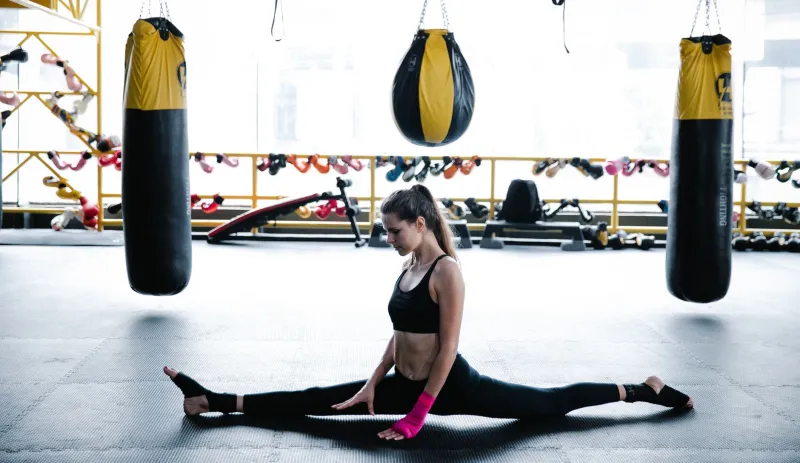
On a heavier bleeding day, you might swap jumping and high-impact moves for machines, seated work, cables or a steady incline walk. You might cut the session from 45 minutes to 20. You might do two rounds instead of four. You might train at home in your own bathroom-adjacent comfort and call it done.
A simple short session could be: five minutes of easy movement, then two rounds of a goblet squat, seated row, hip hinge, floor press or wall press, and a dead bug. Rest as needed. If you are using tampons or cups and feel comfortable, fine, but many people prefer external protection on gym days. There is no prize for matching someone else’s routine.
Know your stop signals
Stop and seek advice if you feel faint or dizzy, if bleeding soaks through protection much faster than usual, if pain spikes severely, or if you feel nauseous, breathless or generally unwell. Stop the session if you are constantly distracted by leakage anxiety and cannot settle. That is not failure. That is feedback.
Bleeding is not a moral test, and the gym is not a courtroom. You are allowed to prepare, adapt and go home. You are also allowed to go, do a short session and feel glad you did. Pack the spare pants. Know the toilets. Choose the kinder version of the plan. That is strength, too.